
Is it worth fitting TT bars on my road bike?
I recently raced in the UCI Gran Fondo World Champs Time Trial event on my Cervelo Soloist road bike with clip on aero bars and finished on the podium, despite competing against full TT set ups complete with disc wheels and customised cockpits. Sure, high end TT bikes are undoubtedly faster, but it also goes to show that a lot can be achieved from a good position. After all, 80% of aerodynamic drag is attributed to the rider and not the bike.
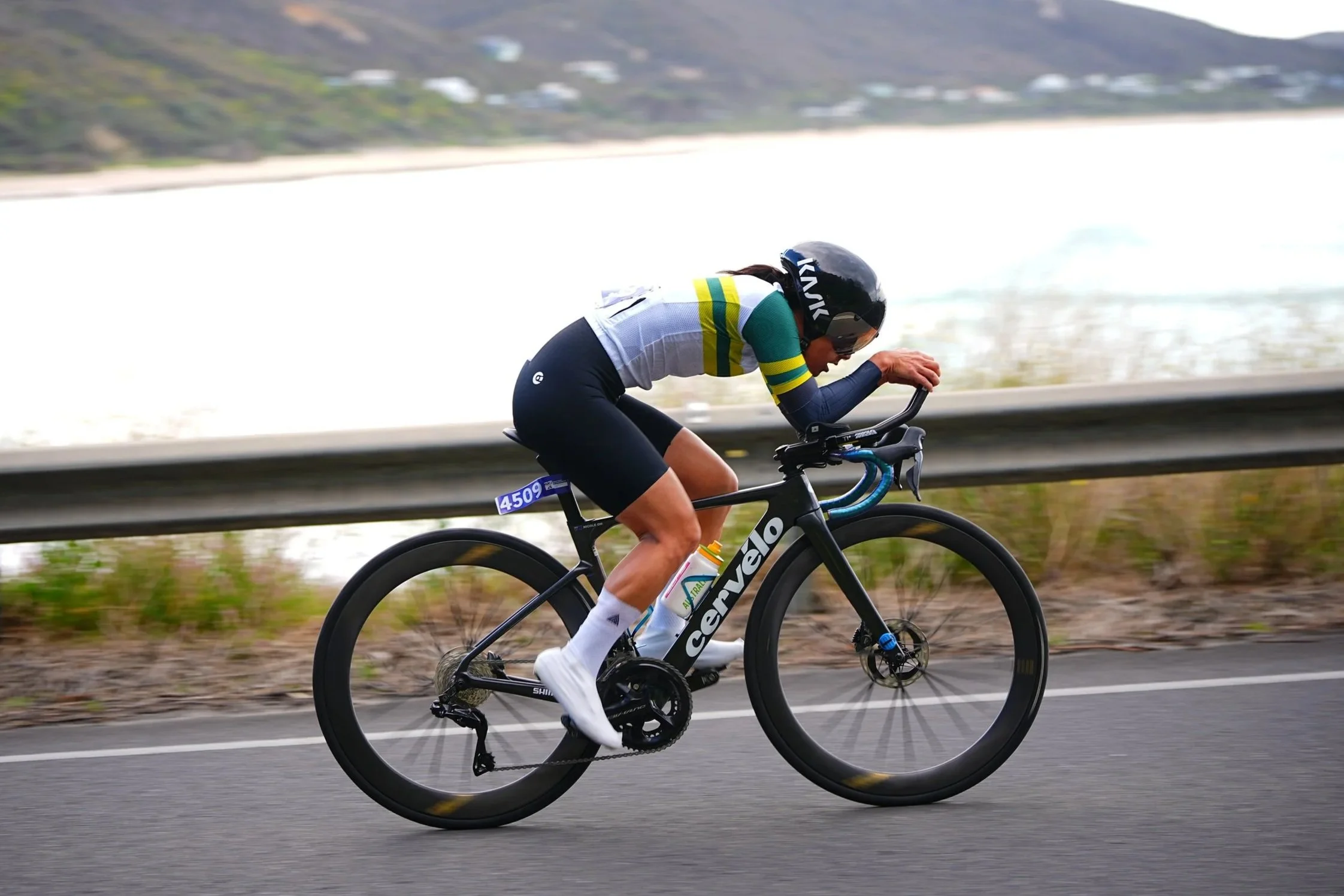
This experience prompted me to write this blog (which I have been meaning to do for a while). Also, with triathlon season in full swing, I am seeing more people in clinic looking for this kind of set up.
The first thing I ask when clients come in with a road bike that they want to fit TT bars on to is if they want to prioritise a road position or TT position, which should correspond to the position they spend the majority of their time training and racing in. One position will always be compromised, as you cannot have the best of both worlds!
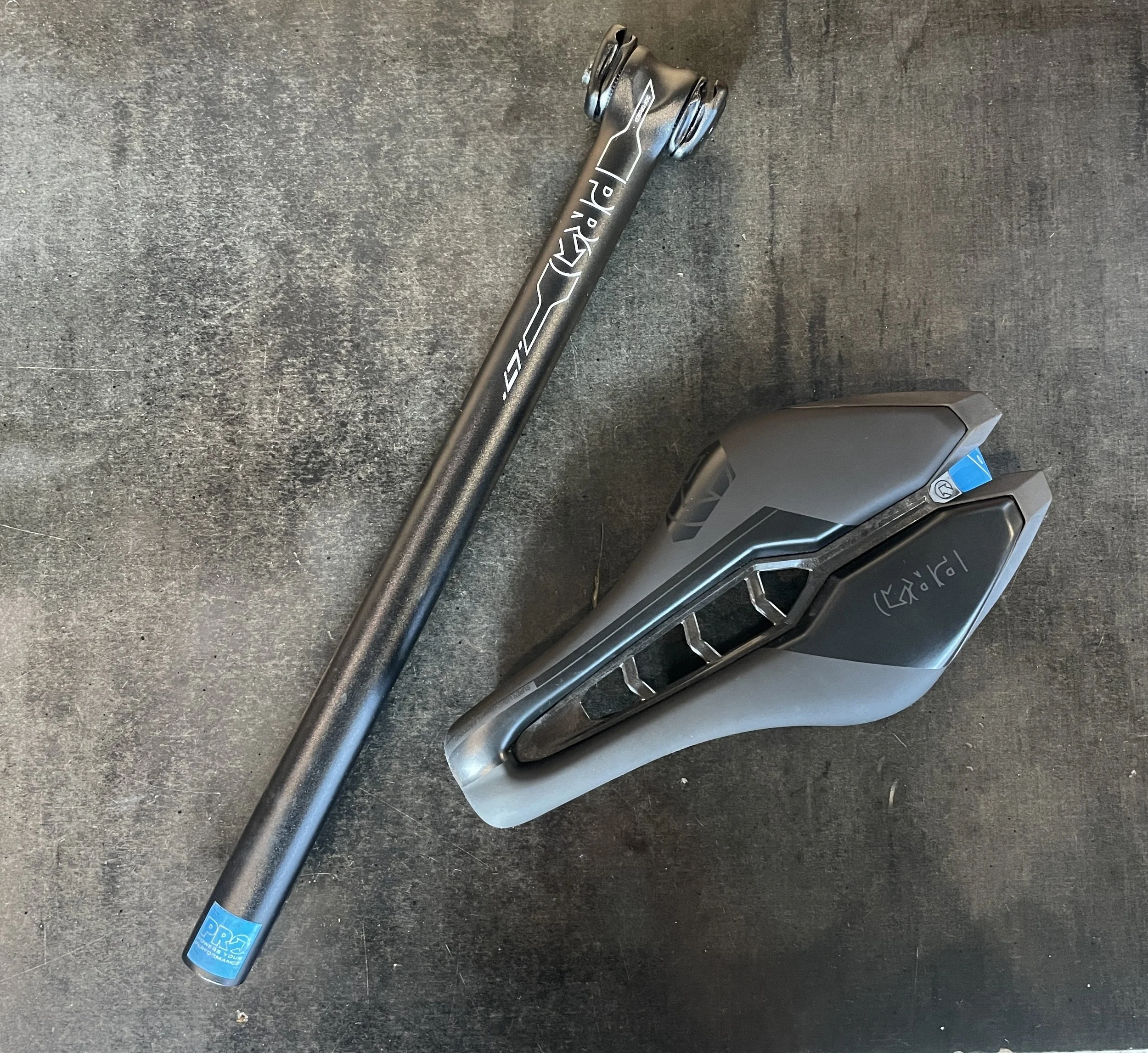
The saddle position for TT is generally further forward and higher to rotate the body about it’s axis and encourage a more open hip angle. Many people will need a zero offset seat post to be able to position the saddle far enough forward.
This position will place more weight on the front end of the bike. This is generally not too much of an issue when riding in the aero bars, but when riding in the hoods it may place excessive pressure on the hands and upper limbs. Handling can also feel more twitchy with less weight on the back wheel, and a narrower base on which to steer.
The handlebars may need to be raised or lowered, or the stem length changed, depending on the geometry of the bike and position you are currently set up in. Clip on aero bars that have a greater range of adjustment in the elbow pads eg. Pro Missile, can alleviate the need to change the stem.
Saddle comfort is often a major issue in the TT position (particularly perineum pressure) with many road saddles not designed for this position. Some road saddles which are relatively wide on the front can work with more nose-down tilt. However, this can again place more weight through the hands when riding in the hoods, increased load on the quads, and cause the rider to slide forward on the saddle. If saddle comfort cannot be achieved, there is the option to change to a TT-specific saddle.
So, is it worth doing?
It really does depend on the individual. For some people, it gives them additional speed without the need to own another bike! For others, there needs to be so many changes to their bike’s components (seat post, saddle, stem etc) to get into a good TT position, that the investment is not worth it to them. Other people will chose to be set up in a good road position, as that is what the majority of their riding comprises, and just fit the TT bars anyway, knowing that this will not be an optimal position, but are available to be used intermittently.
The extent of the changes that need to be made can be predicted by how different your current road position is to a TT position. If you are already able to ride long periods in the aero hood position in your current road bike set up, then you will more likely be able to achieve a good TT position.
Achieving a good TT position, both on a road bike or TT bike, will largely be influenced by your ability to rotate your pelvis forward. Having good hip mobility and posterior chain flexibility can facilitate this.
And of course, the key to all this is to practice! (outside is best). A TT position is less effective if you experience discomfort and have to sit up out of the bars frequently or are unable to keep your head low. Training in the TT position will allow your muscles to adapt and produce power in a position that is different to your road position. Exercises off the bike can also help improve your mobility and allow you to achieve a better position, as can being taught how to position your pelvis more optimally on the saddle, and shrug down into the bars.
Leading up to Worlds, I spent a good number of hours in the two months preceding riding in the TT position at both Z2 intensity and threshold. It’s not just the position you are fitted in that is important, but the ability to hold it at race pace and when fatigued. I practiced keeping my head as low as possible, and gained confidence in having limited vision up the road.